Bilingual Wedding Invitations: How to Design Them Well
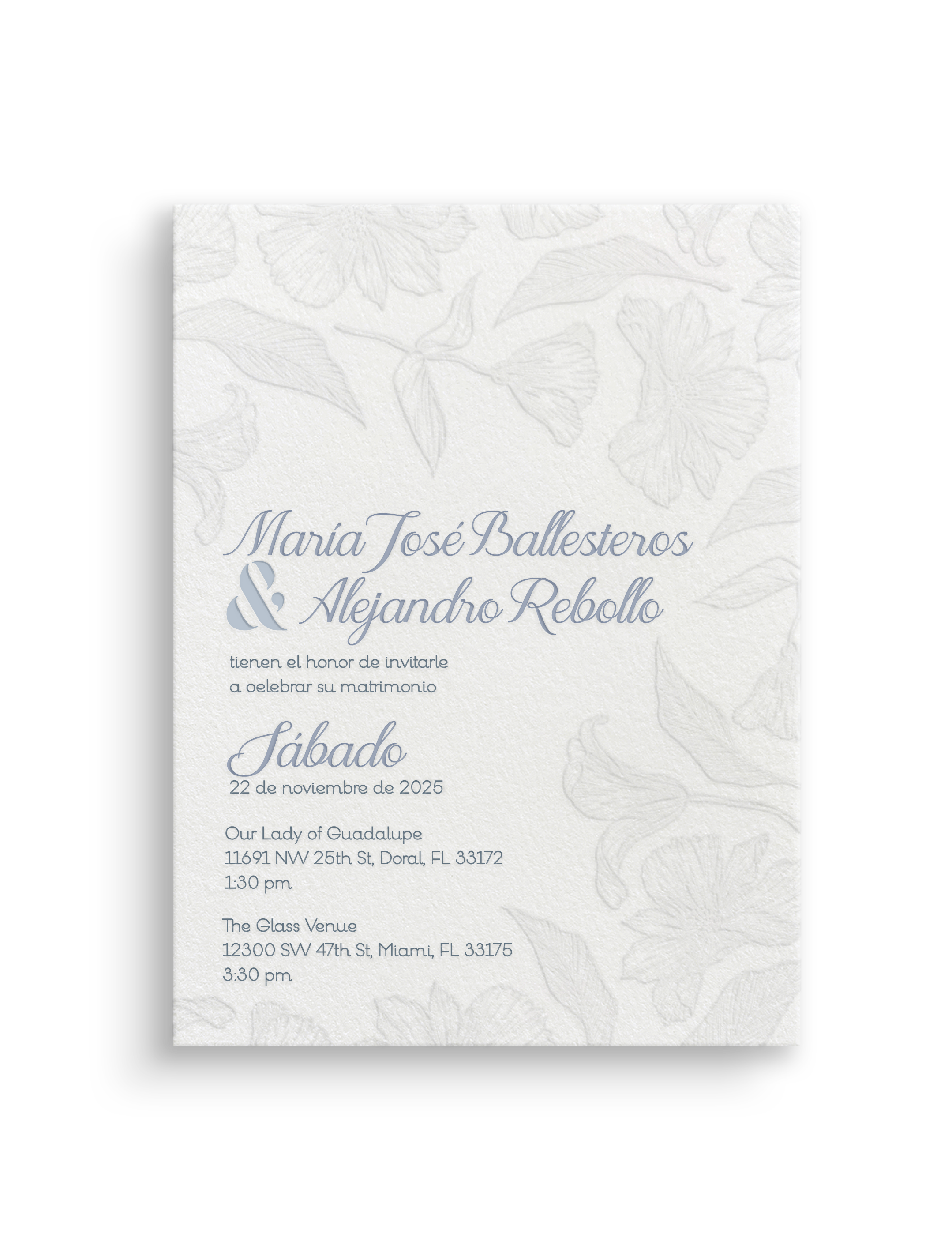
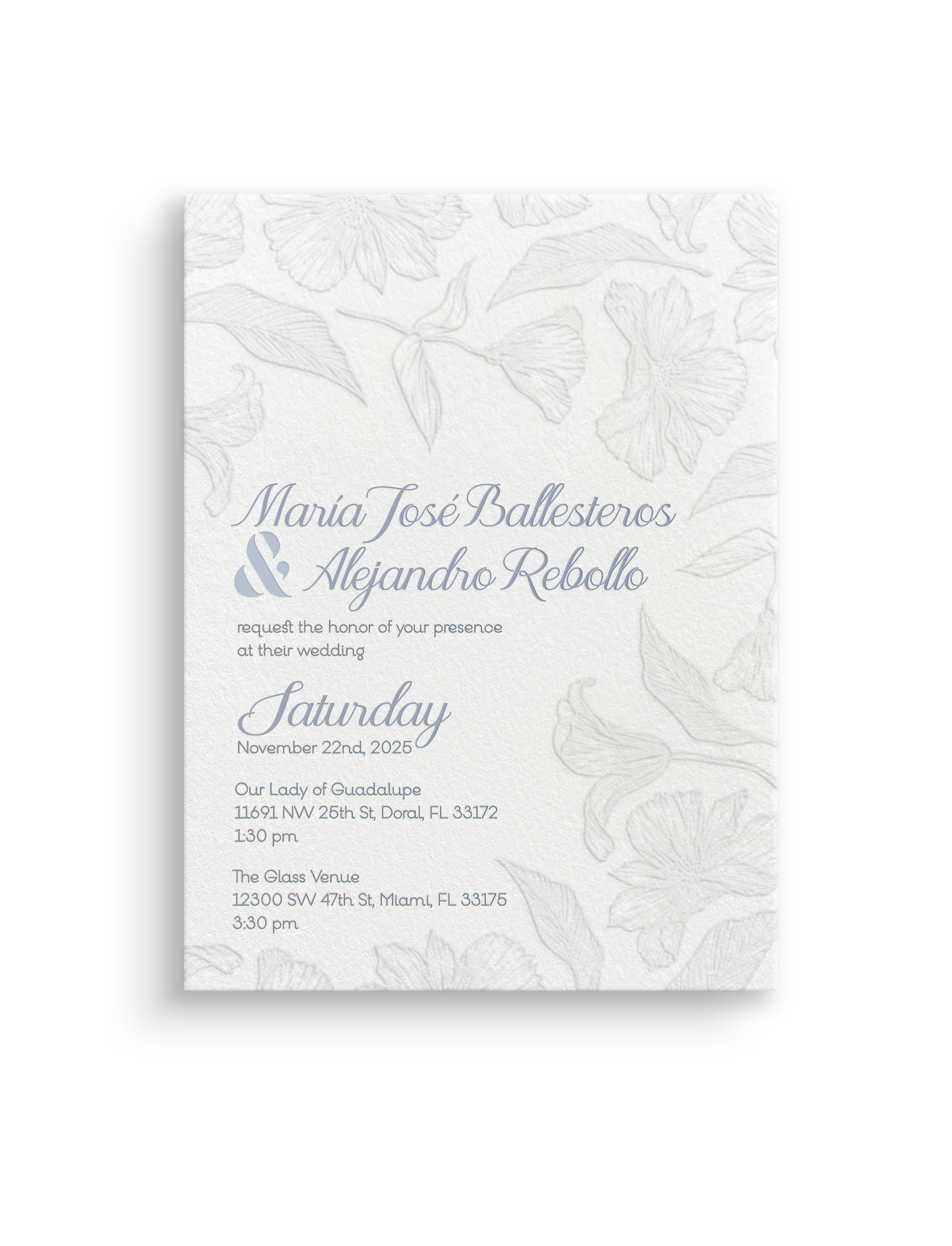
A bilingual invitation isn’t one card translated twice — it’s one design that honors two languages at once. In a city like Miami, that’s not a nice-to-have; it’s who your families are.
When two cultures gather for a wedding, the invitation is the first handshake between them. Done poorly, a second language feels like an afterthought crammed into the margins. Done well, both languages sit as equals — and the piece feels richer for it.
Layout: two languages, one hierarchy
The most elegant solutions rarely put both languages in the same block of text. Side-by-side panels, a folded piece that opens from either language, or a primary-and-secondary structure all keep the design breathing. The goal is for neither language to feel like a translation of the other.
Etiquette and the details couples miss
Names, honorifics, and how parents are listed can differ meaningfully between traditions — and dates, times, and dress code phrases differ differently in each language. These aren’t just translation choices; they’re cultural ones, and they’re where a bilingual suite quietly succeeds or fails.
Where digital helps
A bilingual wedding website lets every guest read the practical details in their own language with a single toggle—keeping the printed invitation clean and the paper a keepsake rather than a manual.
We design bilingual weddings often, for families with roots on more than one continent. If yours is one of them, let’s build a suite that speaks to everyone at your table.